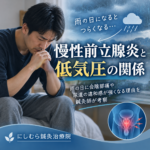




【Improvement Without Touching the Prostate?】The New Understanding: Muscle is the “Real Cause” of Chronic Prostatitis
慢性前立腺炎(慢性骨盤痛症候群/CPPS)は、
泌尿器科で「異常なし」と言われるのに痛みが続く──
この矛盾に悩む男性が非常に多い疾患です。
実はその理由の多くが、
前立腺そのものではなく“骨盤底筋”や“神経”の問題にあります。
この記事では、最新の知見と臨床現場での観察から、
「なぜ前立腺を治療しても治らない人がいるのか?」を深掘りして解説します。
一部には“推測・仮説”も含まれるため、その点は明確に示します。
■ 結論:前立腺炎のような症状の多くは“筋肉のこわばり”が原因
慢性前立腺炎の大部分は、
前立腺に炎症がない「非細菌性」「筋筋膜性」のタイプです。
特に重要なのが、
- 肛門挙筋
- 恥骨直腸筋
- 外閉鎖筋
- 内閉鎖筋
これら 骨盤底筋群のスパズム(こわばり) です。
骨盤底筋の緊張が強くなると、
周囲の神経(陰部神経など)が圧迫され、
- 会陰のズーンとした痛み
- 排尿後の違和感
- 睾丸の重だるさ
- 下腹部の張り
- 尿が出にくい、キレが悪い
といった“前立腺炎そっくりの症状”が現れます。
■ なぜ筋肉が原因なのに“前立腺が痛い”と感じるのか?
理由は神経ネットワークの共有です。
前立腺・会陰・尿道・睾丸は、
同じ神経ルート(陰部神経・下腹神経)で脳につながっています。
そのため、
筋肉が原因でも「前立腺が痛い」と誤認することが起こります。
これは医学的にも確認されており、珍しい現象ではありません。
(※ここからは臨床現場での仮説)
特に以下のような人は、筋肉由来の前立腺痛を感じやすい傾向があります:
- 仕事で長時間座りっぱなし
- 自転車をよく乗る
- 無意識の力み癖(腹圧が強い)
- ストレスで骨盤が締まりやすい体質
- 股関節が硬い
これは、骨盤底筋に血流不足が続き、
神経が過敏化していくためだと考えられます(推測です)。
■ なぜ泌尿器科では“筋肉のこわばり”が見つからないのか?
泌尿器科の検査では、
- 尿検査
- PSA
- エコー
- MRI
- 触診
などが主流ですが、
筋肉の緊張はどの検査にも映りません。
つまり、
「原因は筋肉なのに検査では正常」 → 「異常なし」と判断される
という現象が起きます。
しかし症状は明らかに存在するため、
多くの患者さんが“原因不明の痛み”として悩み続けるのです。
■ 前立腺炎が長引く理由
慢性化すると、筋肉だけでなく
脳が痛みを記憶する「中枢感作」が起こる場合があります。
これは、
- 些細な刺激でも強い痛みを感じる
- 痛みが長引きやすくなる
- ストレスや睡眠不足で悪化する
という状態で、慢性前立腺炎の難治化に深く関係しています。
(※この部分は医学的に確立した理論)
■ 意外な盲点:前立腺炎と“股関節の硬さ”の関係
実は、股関節が硬い人ほど
骨盤底筋の緊張が強い傾向にあります。
- 外閉鎖筋
- 内閉鎖筋
- 梨状筋
などの深い筋肉が硬いと、
骨盤底全体が引きつり、前立腺周辺の神経が刺激されやすくなります。
これは臨床経験上、
股関節の可動域が改善すると前立腺痛が軽くなるケースが多いため、
非常に重要な視点と考えています(推測です)。
■ 鍼灸が改善をサポートできる理由
鍼灸は「筋肉が原因の慢性前立腺炎」に対して特に相性が良い治療法です。
● 鍼灸で期待できる作用
- 骨盤底の深部筋に直接アプローチできる
- 神経の過敏化を鎮める(自律神経の調整)
- 血流の改善でこわばりを解除
- 施術直後から会陰の重だるさが軽くなる例が多い
特に外閉鎖筋・肛門挙筋の深部の緊張を取るのは
ストレッチだけでは不可能で、
鍼灸だからこそ届く領域です。
■ 実際の臨床でよく見られる改善パターン
※以下は臨床経験をもとにした典型パターン(推測・傾向を含む)
- 排尿後の不快感 → 1〜3回で軽減しやすい
- 会陰の重だるさ → 筋スパズムが強い人ほど改善が早い
- 睾丸痛 → 股関節アプローチを併用すると改善率が高い
- 下腹部の張り → 骨盤底×自律神経の両方を整えると改善しやすい
もちろん個人差はありますが、
「原因が前立腺ではなく“筋肉”の場合」
改善スピードが明らかに違います。
■ まとめ:慢性前立腺炎は“前立腺以外”を疑うことが第一歩
慢性前立腺炎が長引く原因は、
前立腺ではなく骨盤底筋や神経の問題というケースが非常に多いです。
そしてこのタイプは、
- 検査で異常なしと言われる
- 薬が効かない
- 症状がぶり返す
という特有の悩みがあります。
もしあなたがこうした症状で長く悩んでいるなら、
前立腺そのものではなく“骨盤底筋の緊張”に目を向けることが改善の大きなヒントになります。
日曜施術OK 自律神経のお悩み、腰痛、慢性前立腺炎の専門鍼灸院 大阪狭山市 にしむら鍼灸治療院 南海高野線金剛駅徒歩12分 施術のご相談、ご予約はLINEでお問い合わせください➡https://lin.ee/5X2dY7a

【Improvement Without Touching the Prostate?】The New Understanding: Muscle is the “Real Cause” of Chronic Prostatitis
Chronic Prostatitis (Chronic Pelvic Pain Syndrome / CPPS): A Puzzle of Pain and Negative Test Results
Chronic Prostatitis (Chronic Pelvic Pain Syndrome / CPPS) is a disorder that afflicts a great number of men who suffer from a persistent pain despite being told by a urologist that their tests show “no abnormalities.”
In fact, the root cause of this contradiction often lies not in the prostate itself, but in issues related to the “pelvic floor muscles” and “nerves.”
This article delves into the question, “Why do some people not recover even after treating the prostate?” We will provide an explanation based on the latest knowledge and observations from clinical practice. Please note that some sections include “speculation or hypotheses,” and these will be clearly indicated.
■ Conclusion: Many Prostatitis-like Symptoms are Caused by “Muscle Tightness”
The majority of chronic prostatitis cases are the “non-bacterial” or “myofascial” type, where there is no inflammation in the prostate gland.
Crucially, the problem involves spasms (tightness) in the following group of pelvic floor muscles:
- Levator Ani Muscle (肛門挙筋)
- Puborectalis Muscle (恥骨直腸筋)
- Obturator Externus Muscle (外閉鎖筋)
- Obturator Internus Muscle (内閉鎖筋)
When the tension in the pelvic floor muscles becomes severe, it compresses the surrounding nerves (such as the pudendal nerve), leading to “symptoms closely resembling prostatitis,” such as:
- Dull, heavy pain in the perineum
- Discomfort after urination
- A heavy, dull ache in the testicles
- Lower abdominal distension (bloating/fullness)
- Difficulty initiating urination, or a weak stream
■ Why is the pain felt in the “prostate” when the cause is muscular?
The reason lies in the shared neural network.
The prostate, perineum, urethra, and testicles are all connected to the brain via the same nerve pathways (the pudendal nerve and hypogastric nerve).
Therefore, even if the cause is muscular, it can be misinterpreted as “prostate pain.” This is medically confirmed and not an uncommon phenomenon.
(※The following are hypotheses from clinical practice)
The following types of people tend to be more susceptible to muscle-derived prostate pain:
- Those who sit for long periods at work
- Frequent cyclists
- Those with an unconscious tendency to strain/bear down (high intra-abdominal pressure)
- Individuals whose pelvic floor tightens easily due to stress
- Those with stiff hip joints
This is believed to be because continuous insufficient blood flow to the pelvic floor muscles causes the nerves to become hyper-sensitized (Hypothesis).
■ Why Urological Exams Don’t Detect “Muscle Tightness”
Urological examinations primarily include:
- Urinalysis
- PSA test
- Ultrasound (Echo)
- MRI
- Digital Rectal Exam (DRE)
However, muscle tension does not show up on any of these tests.
This leads to the following phenomenon:
“The cause is muscular, but the tests are normal” $\rightarrow$ “Judged as no abnormality.”
Yet, the symptoms clearly exist, causing many patients to continue suffering from “unexplained pain.”
■ The Reason Prostatitis Becomes Chronic
In chronic cases, not only the muscles but sometimes the “central sensitization” occurs, where the brain ‘remembers’ the pain.
This condition is characterized by:
- Feeling intense pain even from minor stimuli
- Pain that is likely to linger
- Worsening with stress or lack of sleep
This is deeply involved in making chronic prostatitis difficult to treat. (※This is a medically established theory).
■ An Unexpected Blind Spot: The Relationship Between Prostatitis and “Hip Joint Stiffness”
People with stiff hip joints actually tend to have stronger tension in their pelvic floor muscles.
When deep muscles such as the:
- Obturator Externus Muscle (外閉鎖筋)
- Obturator Internus Muscle (内閉鎖筋)
- Piriformis Muscle (梨状筋)
become tight, the entire pelvic floor is pulled tight, and the nerves around the prostate are more easily stimulated.
Based on clinical experience, we observe many cases where improving hip joint range of motion alleviates prostate pain. Therefore, this is considered a very important perspective (Hypothesis).
■ Why Acupuncture/Moxibustion Can Support Improvement
Acupuncture and moxibustion are particularly well-suited for treating chronic prostatitis caused by muscle issues.
● Expected Effects of Acupuncture/Moxibustion
- Directly accessing the deep muscles of the pelvic floor
- Calming nerve hypersensitivity (regulating the autonomic nervous system)
- Releasing tightness through improved blood flow
- Many cases report relief from the heavy, dull feeling in the perineum immediately after treatment
Crucially, releasing the deep tension in the Obturator Externus and Levator Ani muscles is impossible with stretching alone; it is a region that only acupuncture can reach.
■ Common Patterns of Improvement Observed in Clinical Practice
(※The following are typical patterns based on clinical experience, including speculation and trends)
- Discomfort after urination: Tends to be alleviated quickly, usually within 1 to 3 sessions.
- Heavy, dull perineal ache: Improvement is often faster in those with severe muscle spasms.
- Testicular pain: High improvement rate when combined with a hip joint approach.
- Lower abdominal distension: Improvement is easier when both the pelvic floor and autonomic nervous system are regulated.
While individual differences exist, the speed of improvement is distinctly different when the cause is “muscular” rather than the prostate itself.
■ Summary: The First Step is to Suspect Causes “Other Than the Prostate”
In a great many cases, chronic prostatitis persists not because of the prostate, but due to problems with the pelvic floor muscles or nerves.
This type of condition is characterized by unique struggles:
- Being told there are no abnormalities on tests
- Medication is ineffective
- Symptoms tend to relapse
If you have been suffering from these symptoms for a long time,